Temporary space is often treated as a reactive solution.
A school realises exam capacity is tight.
A refurbishment runs longer than expected.
A construction programme shifts.
A venue hits peak season and demand outpaces available space.
When that happens, decisions are made quickly and sometimes under pressure.
The organisations that get the most value from temporary structures take a different approach. They forecast space needs early, align budgets in advance and treat long-term marquee hire as part of their operational planning rather than a last-minute fix.
If you’re reviewing the year ahead, here’s what to consider now.
1. Identify pressure points before they become problems
Every sector has predictable capacity peaks.
Schools know when exam season and new intakes are coming
Hospitality venues can forecast summer and Christmas demand
Construction firms plan around project phases and weather
Businesses schedule refurbishments and expansions
The key question is simple:
Where will space become constrained?
Mapping this out 6–12 months in advance gives you flexibility around structure size, configuration and installation timing. It also helps determine whether you need short-term cover or a longer-term solution.
In many cases, a temporary structure initially intended for a few months becomes a stable, long-term operational space making long-term marquee hire a strategic investment rather than a stopgap.
2. Plan around budgets, not emergencies
Temporary structures often sit across multiple budget areas:
Capex
Opex
Project funds
Maintenance or contingency allowances
When planning is proactive, you have time to:
Compare specifications
Refine costs
Secure internal approval
Schedule installation to align with wider works
Specification choices such as insulation, flooring, heating, access and finishes, all affect cost and performance. Early planning ensures these decisions are deliberate, not rushed. Read more about accessories here.
3. Don’t overlook the site
The structure itself is rarely the obstacle. The site usually is.
Early consideration should include:
Surface type (grass, concrete, car park — structures can be installed on almost any surface)
Vehicle access for delivery and installation
Available power supply
Integration with existing buildings
Duration of use
Compliance or planning requirements
A straightforward site discussion early in the process prevents delays and ensures the design works practically for day-to-day use.
4. Factor in seasonal demand
Temporary space is available year-round, but demand does fluctuate.
Education
Exams (May–June) → plan in autumn/winter
September intake → plan in spring
Hospitality
Summer trading → secure space in winter
Christmas events → plan by late summer
Construction
Winter protection → plan before autumn
Booking early allows proper coordination with utilities, contractors and internal teams.
5. Specify for real-world use
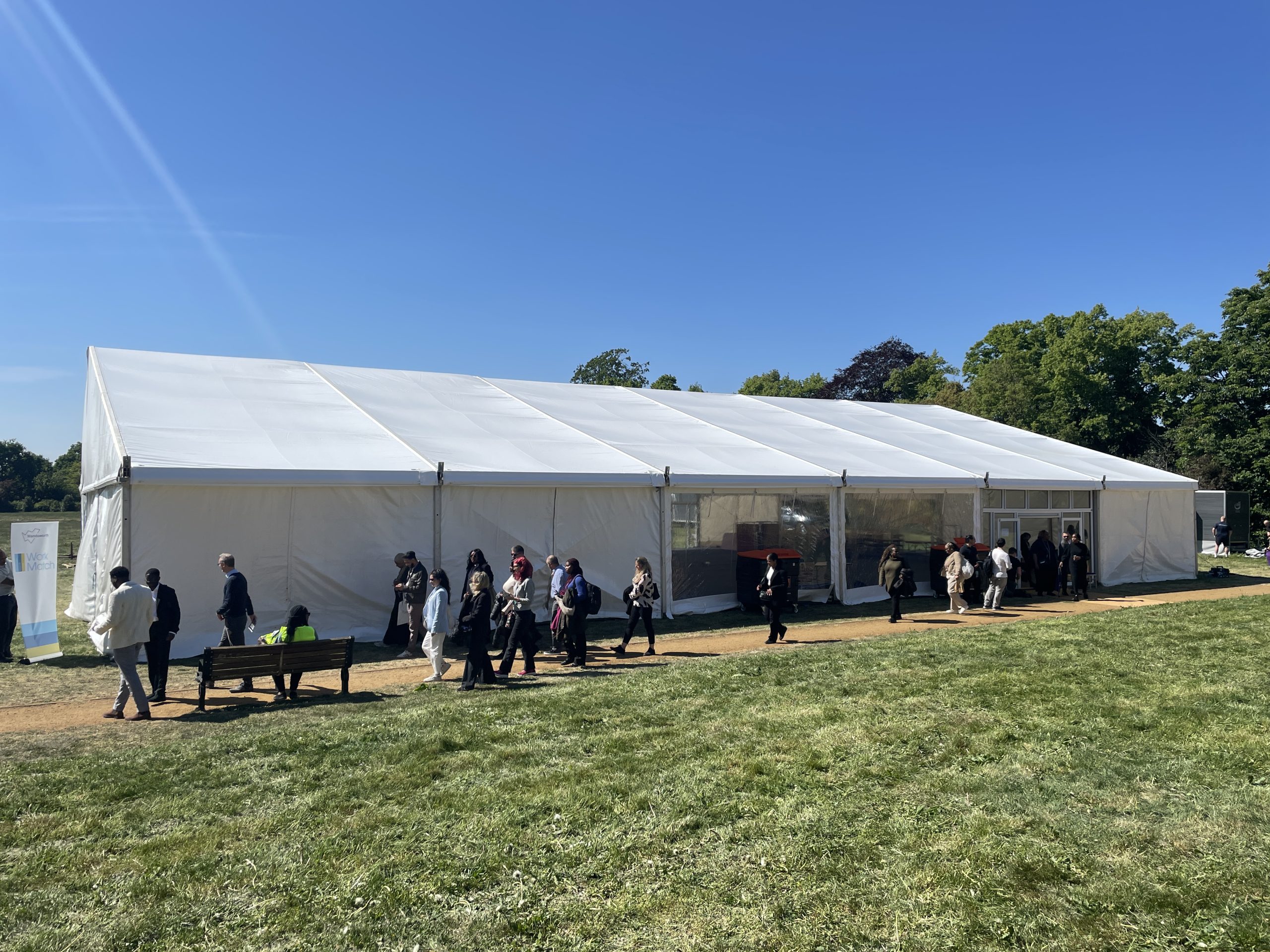
Modern temporary structures are far more versatile than many people expect.
With the right specification, long-term marquee hire can provide:
Insulated, temperature-controlled environments
Solid flooring and walling systems
Integrated lighting
Professional finishes
Fully functional operational spaces
They’re used successfully as classrooms, dining areas, welfare facilities, studios, event environments and workspace extensions.
When planning, ask:
How will this space function daily?
Does it require thermal performance for year-round use?
What internal layout works best?
Is accessibility a factor?
How long will it remain in place?
Clarity at this stage leads to a more efficient, cost-effective outcome.
6. Consider resilience and continuity
Temporary space is often about protecting operations.
Forward planning helps organisations:
Prevent revenue loss
Maintain continuity during works
Protect staff and visitors
Manage structural or building challenges
Respond confidently to growth
In education, hospitality, construction and commercial settings alike, resilience is easier to manage when space is part of the strategy rather than a reaction.
A practical planning framework
If you’re reviewing the year ahead, this phased approach works well:
6–12 months ahead
Forecast demand
Outline budget
Begin early discussions
3–6 months ahead
Confirm specification
Conduct site survey
Schedule installation
1–2 months ahead
Finalise logistics
Coordinate utilities
Confirm access and internal layout
Plan early, stay in control
Temporary structures work best when they’re part of the plan.
An early conversation doesn’t commit you, it simply creates options. And when capacity becomes tight, those options make all the difference.
If additional space is likely to feature in your year ahead, whether for a defined season or through long-term marquee hire, starting the discussion early ensures flexibility, clarity and a smoother project overall.
Get in touch to discuss your temporary space needs.